
August 25, 2026 | 2 minute read
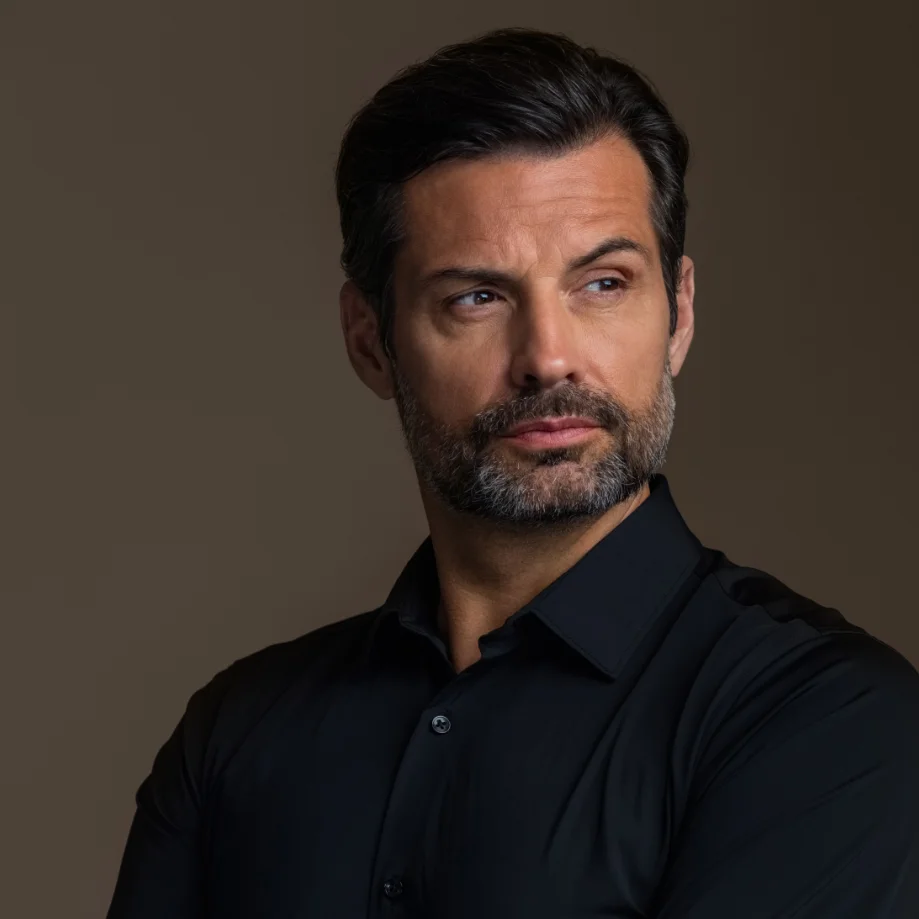
For years, the conversation around facial rejuvenation centered almost entirely on women. That’s changing — and quickly. More men than ever are exploring facial plastic surgery, not to look like someone new, but to look like a sharper, more rested version of themselves.
Why the shift? Two words: visibility and acceptance. Between video calls, professional headshots and a camera that’s always within arm’s reach, men are seeing themselves — really seeing themselves — more often than any generation before them. At the same time, the stigma that once surrounded male aesthetic procedures has faded considerably. Facelifts, neck lifts and eyelid surgery are no longer whispered about; they’re simply part of how many men choose to invest in themselves.
Dr. Jonathan Schwitzer recently spoke with the American Society of Plastic Surgeons about exactly this shift — and why male facial rejuvenation deserves its own conversation rather than a footnote in one built for women. Male facial anatomy, aesthetic goals and recovery priorities are different enough that the surgical plan has to be too, from the way an eyelid crease is shaped to how an incision is hidden along a hairline that may still recede.
In the discussion below, Dr. Schwitzer explains what’s driving more men toward the consultation room, why a male facelift or male blepharoplasty calls for an entirely different approach than the female equivalent, and what patients can realistically expect once they decide to move forward.